

What Does a Sustainable Transformation Actually Look Like?
Direct Answer
A sustainable transformation goes beyond losing weight or changing how you look. It involves building training, nutrition and lifestyle habits that can continue after the initial goal is reached. Progress may include changes in body composition, strength, fitness, confidence and daily routines. The key is creating an approach that fits your circumstances and can evolve as your goals and life change.
The Before and After Photo Doesn’t Tell the Whole Story
A transformation is easy to associate with a visual result.
A smaller waist. More muscle. A different number on the scale.
Those changes can be meaningful, particularly when they reflect someone’s personal goal. But a photograph only captures one part of the process.
What happened between the starting point and the result?
Did the person develop a training routine they can maintain? Did their eating habits become more practical? Did they learn how to manage periods of travel, busy work or disrupted routines?
Those parts of the process may not be visible in a before and after image, but they can determine whether the transformation is something a person can maintain.
The Goal Has to Extend Beyond the First Milestone
Reaching a target can provide motivation, but it also creates an important question:
What happens afterwards?
If someone reaches their desired weight through an approach they cannot realistically continue, maintaining the result can become difficult.
A sustainable transformation considers the habits required beyond the initial phase.
Training may need to evolve as strength and fitness improve. Nutrition may need to change as someone’s goals change. The amount of structure required at the beginning may not be the same later.
This makes transformation more of a process than a single event.
The initial goal still matters. The difference is that the programme is designed with the next stage in mind as well.
Your Body Is Only One Measure of Progress
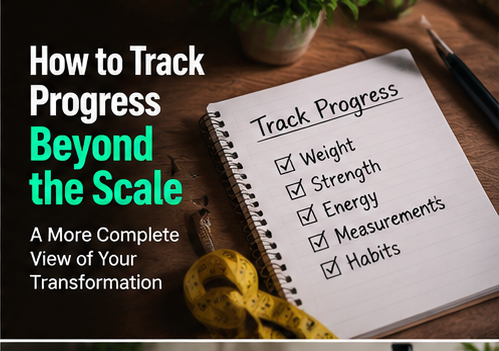
Physical changes are important, but they aren’t the only indicators worth paying attention to. Depending on the individual’s goals, progress might also include:
- Becoming stronger
- Improving cardiovascular fitness
- Developing better movement
- Becoming more consistent with training
- Improving nutritional habits
- Feeling more capable during everyday activities
Someone focused on fat loss may track body weight and body composition. Someone training for performance may care more about strength, speed or endurance.
There isn’t one measurement that can define every transformation.
The useful measures are the ones connected to what the person is actually trying to achieve.
Real Life Will Test the Transformation
A routine can feel easy when everything is going well. The real test comes when circumstances change.
Work becomes demanding. Travel increases. A holiday interrupts the usual routine. Training has to be reduced for a period. Social commitments become more frequent.
A sustainable approach needs enough flexibility to handle those situations.
That doesn’t mean abandoning structure. It means understanding how to adjust without treating every disruption as failure.
For example, someone who normally trains four times a week may need to reduce that temporarily. Someone who usually prepares meals at home may need strategies for eating out during a busy period.
The ability to adapt and return to the routine is an important part of long-term consistency.
The Best Transformation Is One You Understand
Long-term change becomes easier when you understand why you’re doing what you’re doing.
Knowing how your training is progressing, why your nutrition supports your goal and what to adjust when circumstances change gives you more control over the process.
This is where coaching can add value.
TSK’s approach brings together personalised training, nutrition, accountability and progress tracking as part of a broader transformation process. The emphasis is on creating an approach around the individual’s goals and circumstances rather than treating transformation as a fixed formula.
Ultimately, a sustainable transformation should leave you with more than a changed appearance.
It should leave you with a better understanding of how to maintain the changes you’ve worked to create.
FAQ’s
- How long does a sustainable transformation take?
A: There is no single timeline that applies to everyone. The pace of change depends on factors such as the individual’s starting point, goal, training, nutrition and consistency. A sustainable approach focuses on appropriate progress rather than setting an arbitrary deadline.
- Does a sustainable transformation mean I have to follow the same routine forever?
A: No. Your programme should be able to evolve as your goals and circumstances change. What works during an initial transformation phase may need to be adjusted when the focus shifts towards maintenance, performance or another objective.
- What should I track besides my body weight?
A: That depends on your goal. Strength, fitness, measurements, body composition, training consistency and performance can all provide useful information. The most relevant measures are those that reflect the outcome you’re trying to achieve.
- Can I maintain a transformation while travelling or having a busy career?
A: Yes, although the approach may need to be adapted. Training frequency, food choices and routines can change during travel or particularly busy periods.
Planning for those situations can make it easier to return to your usual routine afterwards.
What happens after I reach my transformation goal?
A: The focus can shift towards maintaining your progress or pursuing a new goal. Training and nutrition may be adjusted accordingly. Reaching a target doesn’t mean the process has to stop; it can become the foundation for the next stage.
- A transformation involves more than a visible change in appearance.
- The habits supporting your result matter just as much as the initial result itself.
- Progress should be measured according to your individual goal.
- Life will inevitably disrupt your routine; sustainability includes knowing how to adapt.
- A successful transformation should give you the tools and understanding to continue making informed choices afterwards.
TSK — Sustainable Transformation Through Personalised Coaching
TSK approaches transformation through personalised training, nutrition, accountability and progress tracking. The focus is on building an approach around the individual’s goals and circumstances, with the broader aim of supporting sustainable physical and lifestyle changes.
Sustainable Transformation | Personalised Training | Nutrition | Accountability TSK | Dubai, UAE
Build Something You Can Maintain
A transformation should give you more than a result to look back on. It should help you build habits and an approach that can continue working as your life changes.
Start Your Transformation with TSK